





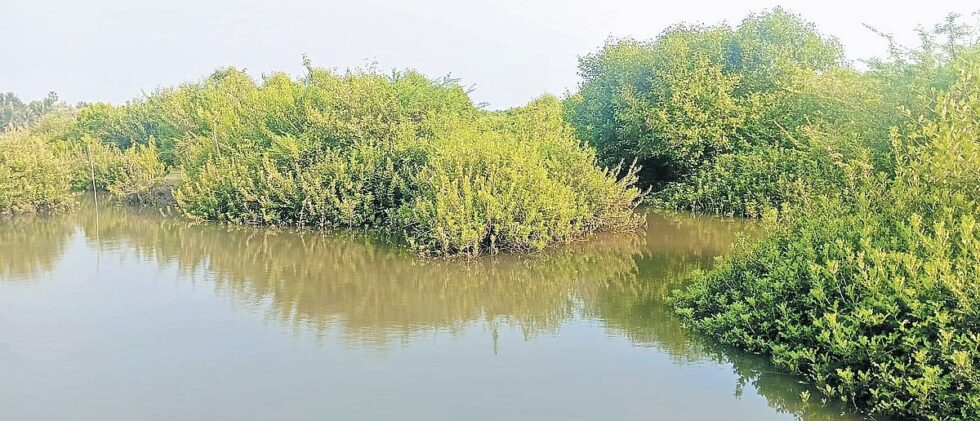
In a concerning development, vast stretches of mangrove forests are vanishing at an alarming rate in the Narasapuram region and its surrounding mandals within the West Godavari district. The once-thriving mangroves, celebrated for their role as natural barriers against cyclones, tidal surges, and coastal erosion, have been replaced by illegal aqua ponds, marking a significant reshaping of the fragile deltaic landscape.
The rapid emergence of these illicit aqua ponds has exposed vulnerabilities in administrative vigilance, raising concerns about the district’s capacity to protect its natural resources and maintain ecological balance. Mangroves serve multiple purposes for the local populace; they provide vital nurseries for fish and seafood, function as carbon sinks, and support eco-tourism initiatives. Their destruction not only threatens to disrupt these services but also puts the region’s livelihoods at risk.
Local authorities must take urgent action to address this ecological crisis by strengthening enforcement measures against illegal aqua pond construction and implementing sustainable development practices in Narasapuram and surrounding areas. Failure to do so could lead to further degradation of the deltaic landscape, with potentially catastrophic consequences for the local community and the environment at large.
M Karunakar, a prominent environmental activist from Bhimavaram, expressed his concerns about the situation: “The destruction of mangroves is a grave concern for our district. Not only are we losing our natural defenses against climate change-induced disasters, but we’re also jeopardizing the livelihoods of countless families whose lives revolve around fishing and eco-tourism.”
In addressing this issue, it is crucial to strike a balance between economic development and environmental conservation. The authorities must prioritize the protection of mangroves while ensuring that locals have access to sustainable income sources. This delicate dance between progress and preservation will be vital in restoring the health of Narasapuram’s ecosystem and ensuring a brighter, more resilient future for all its inhabitants.