




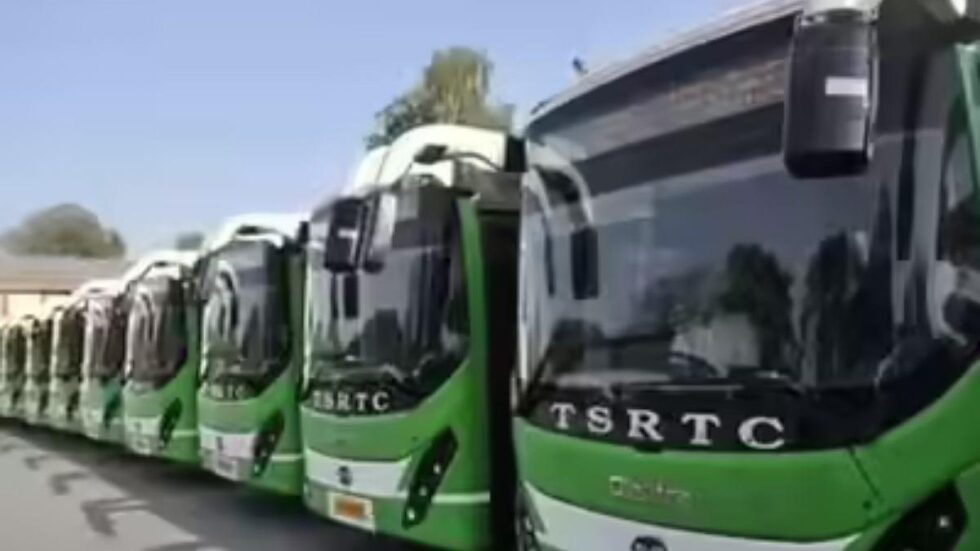
Hyderabad, April 22 – The ongoing dispute between the RTC Joint Action Committee (JAC) and the State government has resulted in an indefinite strike by over 9,000 buses across Telangana, causing concern for lakhs of commuters.
The strike, which commenced at midnight on April 22, follows a breakdown in negotiations between union leaders and the administration over long-pending demands such as pay revision, staff welfare, and merger with the State government. Despite the government’s assurance to form a committee to review these demands, unions have characterized this move as a delaying tactic, justifying the strike as a “last resort.”
The financial impact of the strike is anticipated to be significant. The Telangana State Road Transport Corporation (TGSRTC) reportedly generates between ₹13 crore and ₹16 crore daily, and a prolonged strike could potentially result in substantial losses for both the corporation and commuters. In response, there is a likelihood of inflated auto and cab fares during this period, as regulating prices may not be fully feasible during such disruptions.
Authorities are expected to deploy around 5,000 police personnel at key locations to ensure order and prevent any potential escalation. However, concerns have been raised regarding the safety implications if inexperienced private drivers are employed to operate buses, drawing attention to past incidents that underscore the risks involved.
The ongoing strike has sparked growing anxiety among commuters, especially women, students, and daily-wage earners, who now face a challenging commute phase. With the JAC vowing to continue the strike until all 32 demands are addressed, there is a possibility that the disruption could extend indefinitely, echoing the 52-day-long RTC strike of 2019.
For now, citizens are advised to seek alternative modes of transport such as Metro and MMTS services, which remain operational during this period. The situation is being closely monitored by authorities, who will make further announcements if necessary.